
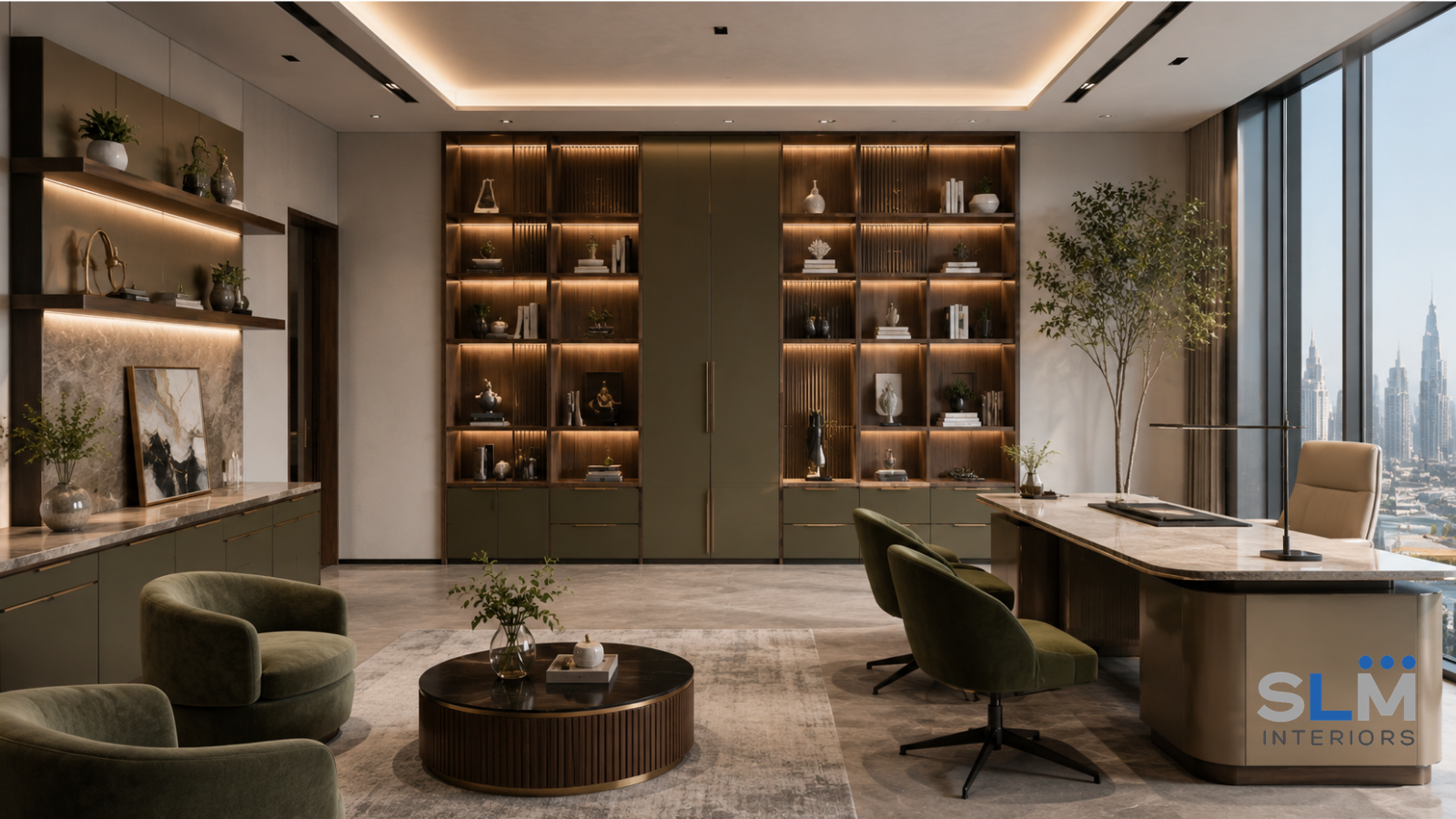
 Planning an interior fit-out project in Dubai requires careful budgeting. Whether you are developing an office, restaurant, retail shop, clinic or residential property, the final cost depends on several factors.
There is no single fixed price for every project because every space has different requirements, design specifications, materials and technical conditions.
Understanding the factors that influence interior fit-out cost in Dubai can help property owners and businesses prepare a realistic project budget.
What Is Included in an Interior Fit-Out?
An interior fit-out can involve several stages of transforming a space into a completed environment.
Depending on the project, this may include:
- Interior design
- Space planning
- Civil and construction works
- Flooring
- Ceiling works
- Wall finishes
- Electrical works
- Lighting
- Plumbing
- HVAC and MEP works
- Glass partitions
- Custom joinery
- Furniture
- Painting
- Decorative finishes
The exact scope depends on the type of property and the client’s requirements.
Main Factors Affecting Interior Fit-Out Cost in Dubai
1. Size of the Space
The overall size of the property is one of the basic factors affecting project cost.
Larger spaces generally require more materials, labour, lighting, flooring, ceiling work and MEP installation.
However, cost is not determined by size alone. A smaller luxury project can sometimes require more investment per square metre because of premium finishes and custom work.
2. Interior Design Complexity
A simple and minimal design usually requires fewer construction and decorative elements.
A highly customised interior may require:
- Feature walls
- Curved elements
- Decorative ceilings
- Special lighting
- Premium materials
- Custom furniture
- Bespoke joinery
The more detailed the design, the more planning and execution may be required.
3. Choice of Materials
Materials have a major influence on the overall project budget.
Options may include different grades of:
- Wood and wood finishes
- Marble and stone
- Tiles
- Glass
- Metal
- Paint
- Wallpaper
- Flooring materials
- Decorative surfaces
Choosing materials according to the required quality and performance can help balance design expectations and budget.
4. Custom Joinery
Custom joinery can be an important part of office, retail, hospitality and residential interiors.
Built-in cabinets, reception counters, wardrobes, shelving and feature walls require specialised fabrication and installation.
The cost depends on design complexity, dimensions, materials, hardware and finishing quality.
5. MEP Requirements
Mechanical, electrical and plumbing requirements can significantly affect the cost of a fit-out.
Projects may require modifications or new installations for:
- Air conditioning
- Electrical systems
- Lighting
- Plumbing
- Fire safety systems
- Ventilation
- Data and networking
Commercial projects often have more technical requirements than simple residential interiors.
6. Flooring and Ceiling
Flooring and ceiling finishes can significantly influence the appearance and budget of an interior.
Depending on the project, options may include:
- Porcelain tiles
- Marble
- Vinyl
- Carpet
- Wooden flooring
- Suspended ceilings
- Gypsum ceilings
- Decorative ceilings
7. Project Location and Site Conditions
Existing site conditions can affect the amount of preparation and construction required.
For example, a space requiring demolition, extensive electrical modifications or additional MEP work may require a larger budget than a ready-to-use property.
How to Create a Realistic Fit-Out Budget
Before starting your project, consider the following:
Define Your Requirements
Determine what you need from the space before finalising the design.
Set a Budget Range
Establish a realistic investment range based on your business or property goals.
Prioritise Important Areas
Spend more on areas that have the greatest impact on customers, employees or residents.
Select Materials Carefully
Choose materials based on durability, appearance, maintenance and budget.
Keep Contingency in Your Plan
Unexpected site conditions or design changes can increase project costs. Keeping a reasonable contingency can provide greater financial flexibility.
How Can You Control Interior Fit-Out Costs?
You can manage your budget by:
- Finalising the design before construction
- Selecting materials early
- Avoiding unnecessary design changes
- Using efficient space planning
- Comparing suitable material options
- Coordinating design and execution
- Working with an experienced fit-out contractor
Why Professional Planning Matters
A professional interior design and fit-out team can coordinate design, materials, technical requirements and execution.
This can help reduce design conflicts, unnecessary changes and delays during the project.
Final Thoughts
The cost of an interior fit-out in Dubai depends on many factors, including space size, design complexity, materials, joinery, MEP works, finishes and project requirements.
Rather than focusing only on the lowest initial quotation, businesses should consider quality, durability, functionality and the complete project scope.
SLM Interiors offers interior design, fit-out, renovation and joinery solutions in Dubai for commercial and residential projects.